
How to Maintain Pecan Kernel Quality Year After Year
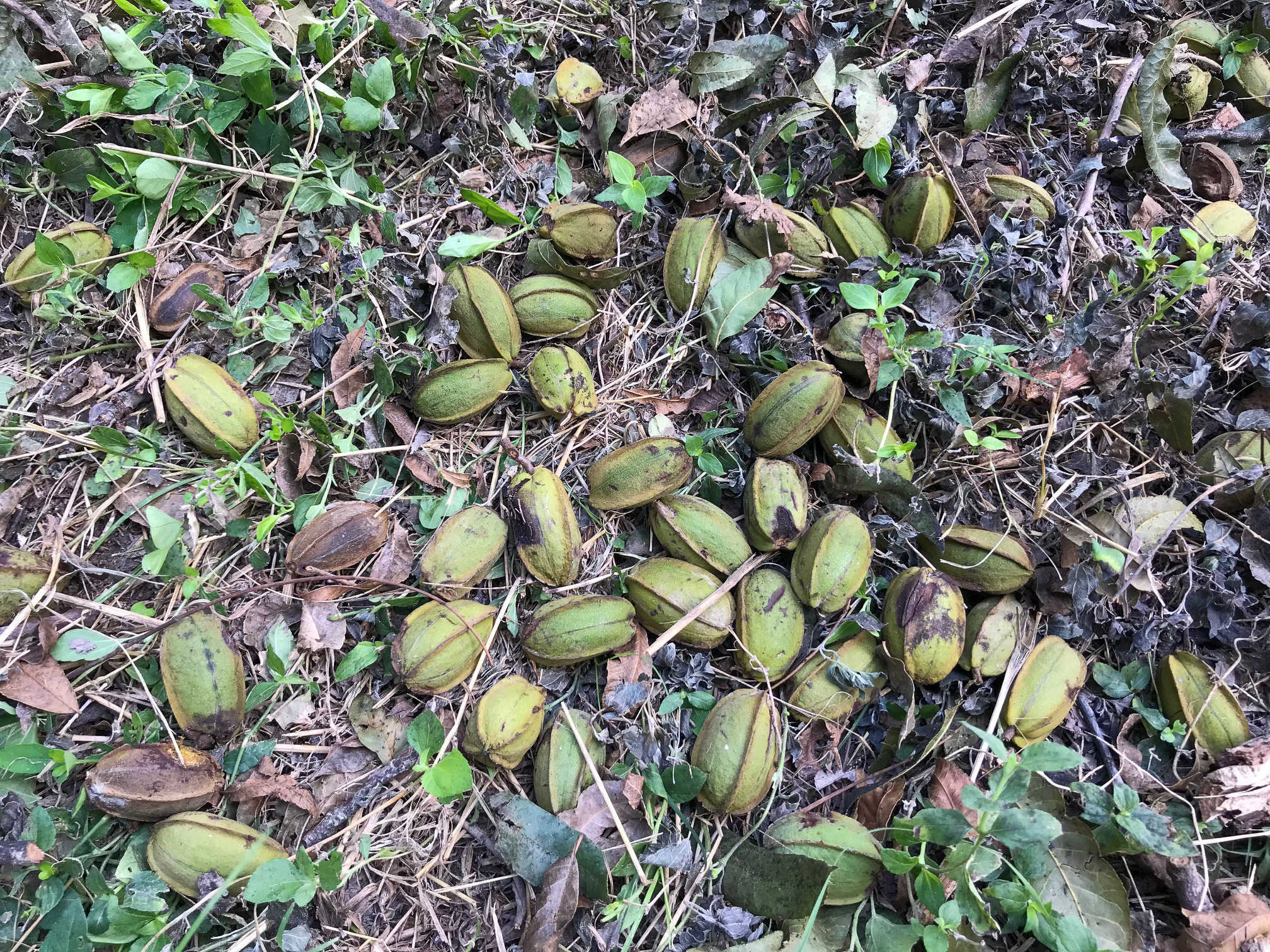
These natives pecans fell to the ground due to the load on the tree. (Photo by Larry Stein)
The first factor that affects crop quality is crop load. Many times, the crop size is not apparent until the leaves drop from the trees. For example, once the leaves fall, you may notice a crop down low but little to none in the top of the trees. Interestingly enough, trees that had a big crop in 2018 fall into this observation. These trees seemingly only have crop in the very top of the tree. I see this phenomenon in orchards where the crop load was managed because typically the side branches, which bend and zag, often do not shake near as well as the top of the trees from where most of the nuts come out. So, it is possible to thin some areas of the tree just right and others not so well, and that thinning is what dictates the return crop set.
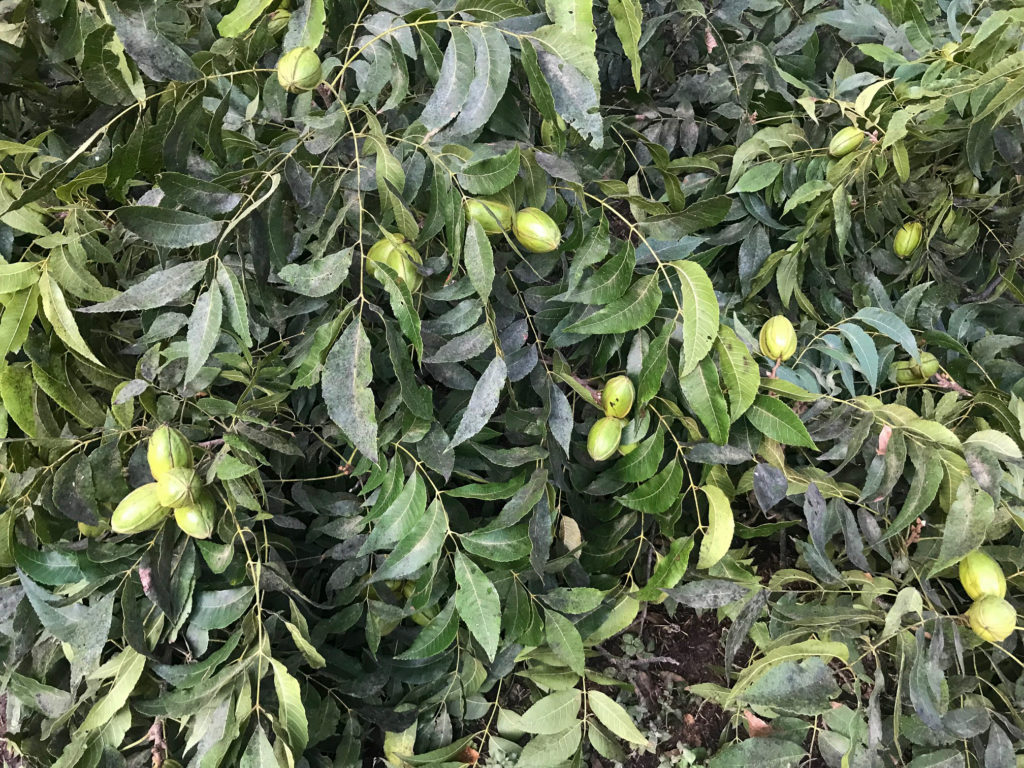
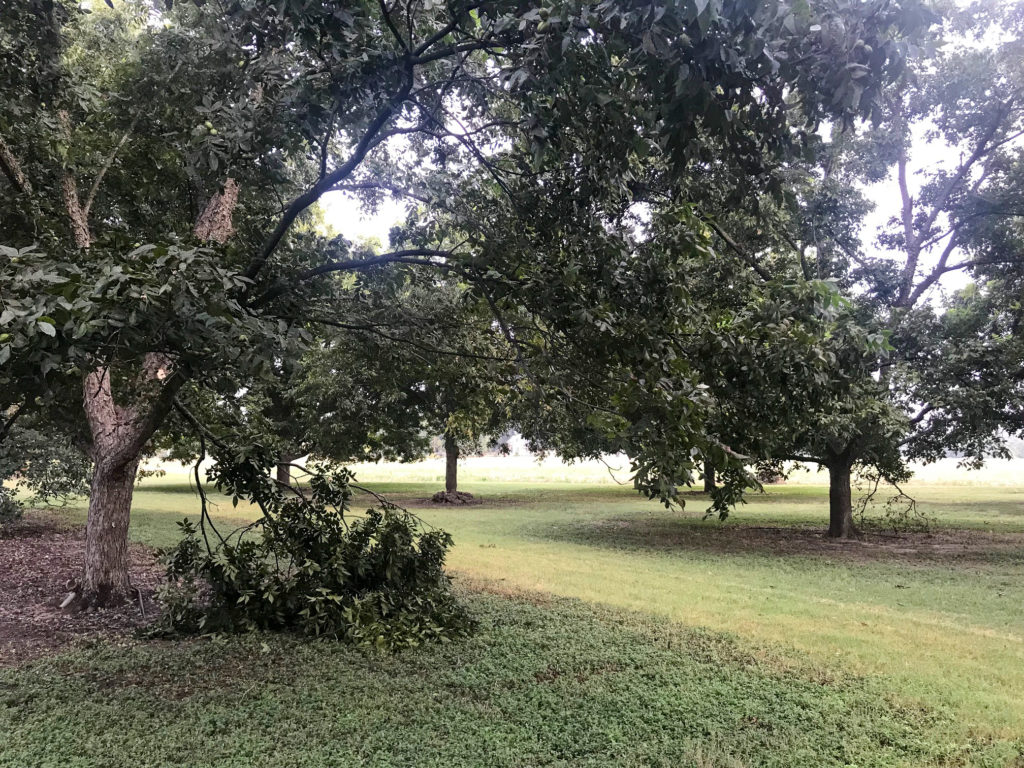
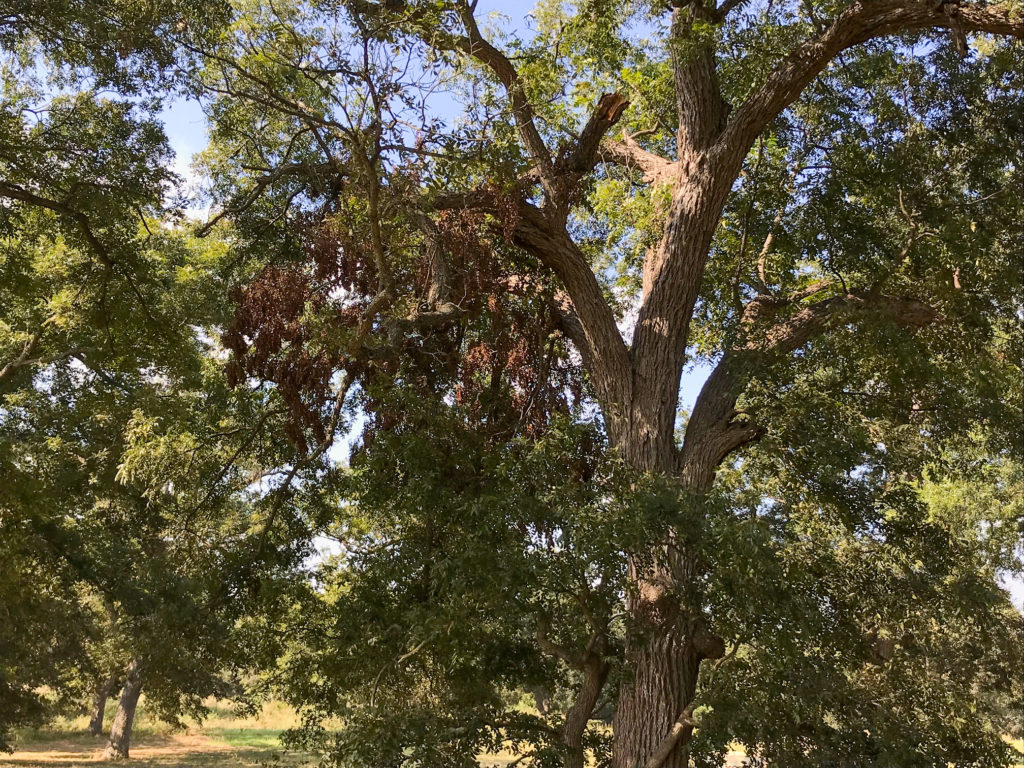
Years ago, growers were challenged to grow leaves, and it was said that if you could grow leaves, you could grow pecans, and the pecan production thing would take care of itself. I think that belief holds to a certain extent. No doubt, trees will over-crop, and your job as a grower is to figure out when you have too many pecans, but still, your trees need leaves to produce quality kernels. The reason that there was such a priority on growing leaves was that they are the workhorses for the tree. Leaves capture light and make food. That food feeds the tree and fills out the nuts. So, the better the light conditions, the more potential food can be made for the tree.
For this year, we are basically at the point of no return. What is going to happen will happen; not much we can do management-wise other than keep the trees watered as best we can. Realize that the final nut fill and shuck opening is the most critical water use event by the tree. If water is lacking, so will nut fill and subsequent shuck opening. By providing sufficient water, we can help ensure our crop’s quality. Researchers and pecan specialists believe mature orchards need 2 inches of irrigation water a week until shuck split to make this quality happen.
It has been relatively dry in many areas to date, but there has been a lot of sunshine. Dry conditions are a good thing as long as the trees have adequate water. A year ago, it turned out to be very wet, which initially was good. The only problem was that the poor light conditions persisted which hampered photosynthesis. Therefore, two critical factors in quality nuts are adequate sunshine and water. Unfortunately, environmental factors sometimes create situations which we cannot control that can prove a challenge to late-maturing varieties.
When you really think about it, there are only a few things that you can control when you grow pecans. Assuming you only plant on good soil that drains well and you control weeds, apply fertilizer, and irrigate; as long as you also have good spacing with good sunlight, your crop load will remain the most critical thing for you to get right. But managing crop load is no easy task.
As you begin harvest this fall, you need to note the heavy loaded areas in your orchard and check to see how well you did with your program. Did you take enough nuts off the trees or is the quality still suspect? If the crop load was too much, how did you determine how much you had? Pecan specialists advocated that growers maintain a specific number of terminals with nuts, which can be a challenge to evaluate in the tops of the trees. Still, previous research does suggest that terminals with nuts this year are less likely to have pecans next year, so an ideal situation would be to have 50 percent terminals (shoots) with and 50 percent without nuts. The blank shoots should come back with a crop next year. The gray area though is how far past the 50 percent terminals can you push your trees. We do know that if all the terminals have pecans, that is far too many, but sometimes under the right management program, you can push the limit to seven or maybe even eight shoots out of ten that have pecans.
Another way to evaluate crop load is just by looking at the trees. Some can go into orchards or native groves this time of year, look at the trees, and tell what they have. Signs they look for are bending or broken limbs and the number of nuts on the ground. Many trees, when heavily loaded with nuts, have limbs that strain unmercifully under the weight and often, in this situation, break in the tree or fall to the ground. If these broken limbs are coming from the tops of the tree, you can get a good handle on the crop load. So check out any broken limbs in your orchard or grove. Did they break from sheer weight or was it a weak limb angle? Also, examine the limb and check how many pecans it has; better yet, try to move the limbs. It amazes me how heavy some of these branches are when you go to move them; after that exercise, you wonder how all the limbs don’t break!
As I indicated earlier, it is often a challenge to know what kind of nut load is in the treetops, especially in native groves. So, growers often look for bending limbs, but that can be difficult. You also need to realize that if there are nuts in the tops of the trees, then some pecans will have fallen off. In most years, 40 percent of the nuts a tree sets typically fall off for one reason or another. Hence, when you drive under the trees at this time, you ought to hear a popping sound as you drive over and crush the nuts with your vehicle. The more popping you hear under a tree, theoretically, the more nuts in the top of the tree. So check this out as well. In the future, you may be able to drive through your orchard or grove and determine the kind of crop you have based solely on the popping sound or lack thereof.
Crop load is no easy thing to figure out, but it is one you will have to get a handle on if you are going to grow quality kernels year in and year out. Going forward, make it a point to note how well you did this year. Are there certain areas where the nut quality is never good? If so, you really should consider removing those trees. How about variety? Do some cultivars have good quality nuts and others do not? The varieties that are poor in quality ought to be taken out.
Lastly, note the overall crop load and if it was light, then record what management decisions you need to make this fall and winter. If the crop is very light and the tree leaves are very healthy, then obviously you should come back with a big crop in 2020, so it may be that you can take limbs out or hedge this winter to reduce the potential crop load going into the next year. These observations will help you perfect your management program and, one day, balance out your crop size year after year. Until next time, happy harvesting!
