
The Good Guys: Natural Enemies 101
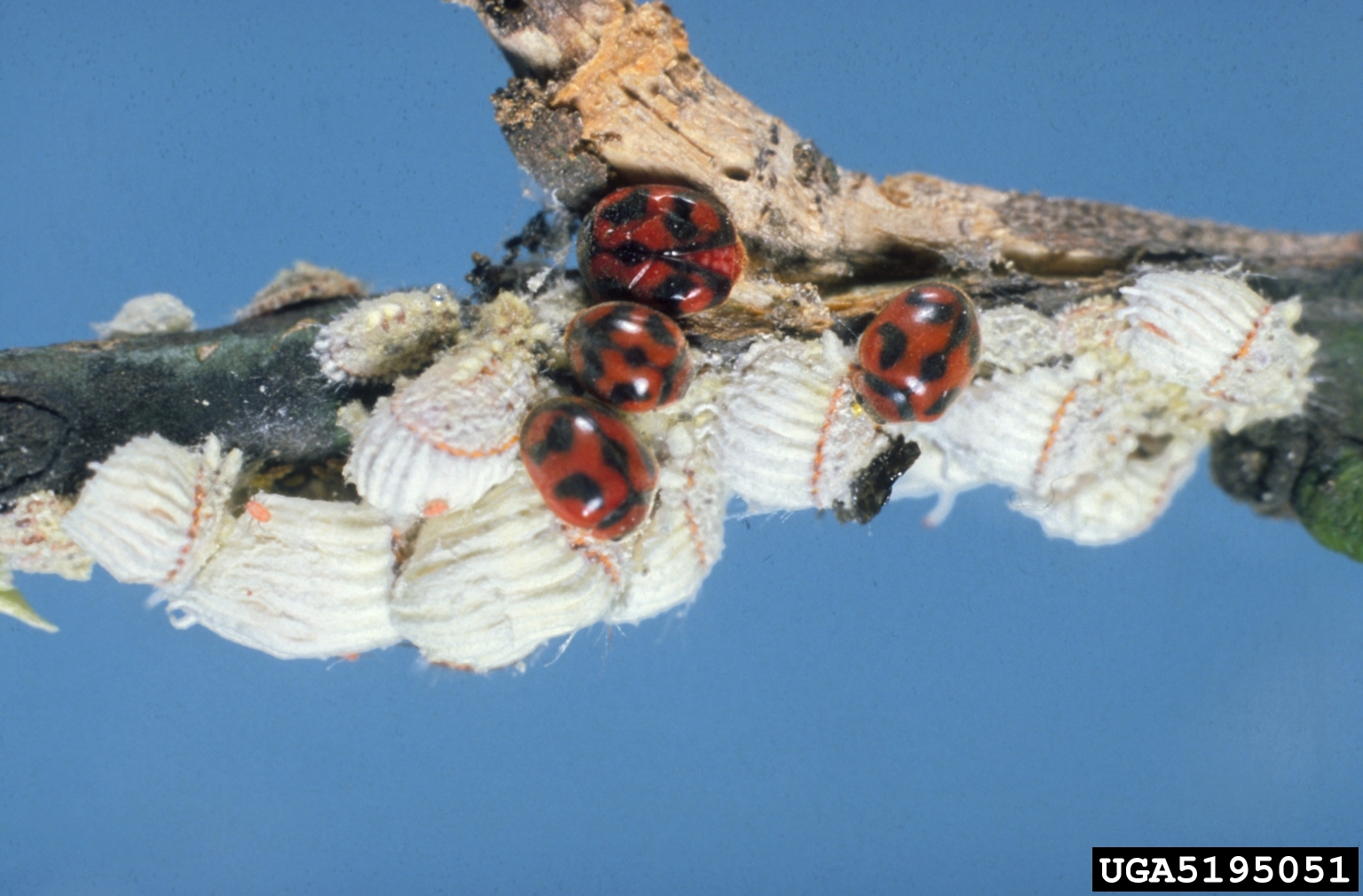
Use of the vedalia lady beetle (Novius cardinalis) to control cottony cushion scale (Icerya purchasi) on citrus is often cited as one of the first big biological control success stories. Photo Credit: Jeffrey W. Lotz, Florida Department of Agriculture and Consumer Services, Bugwood.org
History and Types of Biological Control
Biological control is defined as the use of living organisms to suppress the population of a specific pest organism, making it less abundant or less damaging than it would otherwise be (Eilenberg et al. 2001). The practice of biological control has ancient roots. For example, as early as 324 BCE, citrus growers in China were documented building bamboo runways to encourage weaver ants (Oecophylla smaragdina) to move between citrus trees to manage caterpillars and wood boring beetles (Pedigo et al. 2021).
Traditionally, early biological control programs focused on identifying and importing the natural enemy of an invasive pest species from their original homeland with the idea that the natural enemy would fulfill its traditional role of suppressing the pest (termed “Classical or Introduction biological control”). The foundation for this idea stems from what is known as the Enemy Release Hypothesis, which proposes that the success of an invasive species is due to it being released from suppression by its native natural enemies upon introduction to a new area (Heimpel and Mills 2017; Pedigo et al. 2021). In pecan, numerous insect and mite species feed on pecan without causing significant economic damage. While there are many factors that influence why some pest insects are significantly more devastating than others, it is possible that some minor pests may be minor pests due to the impact of natural enemies on their populations (Heimpel and Mill 2017; Pedigo et al. 2021).
A well-documented case of successful classical biological control was the introduction of the vedalia beetle (Novius (Rodolia) cardinalis) and a parasitic fly (Cryptochaetum iceryae) in 1888 to manage the cottony cushion scale (Icerya purchasi), thus saving the fledgling California citrus industry. The success of this program helped establish biological control in the United States as an alternative method to insecticides (Sawyer 1996). Greathead and Greathead, in a 1992 paper, estimated that 722 biological control agents had been introduced up to that point and had achieved at least some level of control over sixty-three insect and mite pests. Classical biological control of pests also includes weeds, and several weeds have also been managed by importing herbivorous natural enemies. The most well-known of these programs was the use of the South American cactus moth (Cactoblastis cactorum) to manage prickly pear (Opuntia spp.) in Australia (Hajek and Eilenberg 2018). Issues with classical biological control often stem from unintended effects of natural enemies once released into a new environment. This was often an issue in early classical biological control schemes, especially those involving vertebrate natural enemies. For example, the cane toad (Rhinella marina) was introduced to Australia in the 1920s and 1930s to manage greyback (Dermolepida albohirtum) and frenchi (Lepidiota frenchi) cane beetles. It was soon discovered that the cane toads would only feed on insects crawling on the ground as opposed to the two cane beetles that preferred the tops of the canes. The toads provided no pest control and instead proceeded to establish in their new home and began to feed on and devastate many native Australian species (Shine 2010; Hajek and Eilenberg 2018). These mistakes have also occurred with insect biological control agents. One notable example was the introduction of a parasitic fly (Compsilura concinnata) in the early 1900’s to manage the spongy moth (Lymantria dispar), a major pest of hardwood forests in the northeastern United States. The fly, however, also parasitized native silk moths, greatly reducing their populations (Hajek and Eilenberg 2018). Issues such as these have led to stricter testing and assessment prior to introduction. This has resulted in classical biological control being safer and more carefully thought out, but also a much slower process than it initially was.
Two other types of biological control are also recognized, with varying degrees of overlap between the three different types. Augmentation biological control is the practice of increasing natural enemy populations through mass releases. These releases often need to be repeated each season or year, and permanent establishment is not often expected. Most natural enemies that are part of augmentation programs are often either commercially produced, such as the tiny parasitic wasp Trichogramma, or collected from the wild populations, such as the convergent lady beetle (Hippodamia convergens) (Pedigo et al. 2021). Biological control has also developed to encompass the concept of protecting and nurturing native natural enemies in the environment to assist in pest management (known as Conservation biological control). This has become the most widely practiced form of biological control. Conserving natural enemies is built around two major practices: alternative habitat management and mitigation of broad-spectrum insecticides. Alternative habitats provide food and shelter for natural enemies during certain parts of their life cycle or when their primary prey is scarce or absent. For example, lacewing larvae are vicious predators of aphids, but the adults of many species primarily rely on pollen and nectar as food. Additionally, parasitoid wasps may reabsorb their unlaid eggs if they don’t have access to pollen and nectar (Rusch et al. 2010). Thus, alternative habitats provide resources for natural enemies that keep them in the area year-round. Mitigating broad-spectrum insecticides helps preserve natural enemy populations because they are formulated to kill insects regardless of their ecological role in the environment. Natural enemies often take longer to reproduce and develop slower than their prey and thus recover more slowly from pesticide application. This life cycle discrepancy contributes to pecan aphid outbreaks/flares when broad-spectrum insecticides such as pyrethroids are applied. Therefore, it is important to consider the potential implications of applying broad spectrum insecticides and whether there are natural enemy-safe alternatives available. Natural enemies are not all the same and fulfill many different roles in the environment. Despite these diverse roles, natural enemies can be grouped into three main groups: parasites, predators, and pathogens. We will discuss each of those groups here and the roles they play in the environment.
Types of Biological Control Agents
Parasites. A parasite is any animal that lives on or within another animal, while the organism being fed on is called the host (Pedigo et al. 2021). The most well-known parasites are those that feed on humans, such as ticks, fleas, and lice. Feeding by the parasite often causes the host to weaken and, in some cases, die. Perhaps the most important group of parasites in agriculture is the parasitoids that have been used more than any other biological control agent. Parasitoids are parasitic only during the immature stage of their life cycle, whereas adult parasitoids don’t rely on a host for survival. While there is some variation in the life cycle of parasitoids, the basic lifecycle is as follows: 1) The free-living adult female mates (if her species requires males for reproduction) and searches for a host; 2) Upon finding a host, the female lays her eggs on or near the host; 3) the larvae hatch out and infest the host; 4) the larvae feed and develop inside the host, in some instances the host dies quickly, but in other case the host may live out its full life before dying; 5) The larvae pupate in or on the host; 6) The larvae emerge as adults and depart to start the cycle anew. Several groups of insects have members that are parasitoids, including beetles, flies, wasps, moths, mantidflies, and twisted-wing parasites. However, the most significant parasitoids in agriculture are the parasitic wasps and flies. In pecan, several parasitoids are present that help manage pest insects. One parasitoid that is rarely seen but evidence of its presence can be observed throughout the summer, is that of the pecan aphid parasitoid Aphelinus perpallidus. When this small, yellow, parasitic wasp lays its egg inside a pecan aphid, the larvae feeds on and kills the aphid, reducing the aphid to a black, dried, husk known as a mummy (Tedders 1978). Surveys done on the parasitoids of pecan nut casebearer (Acrobasis nuxvorella) (PNC) in Texas have found at least 28 species of parasitic wasps and flies that attack PNC larvae (Nickels 1950; Knutson and Ree 2019). The feather-legged fly (Trichopoda pennipes) is a parasitoid of stink bugs and leaffooted bugs, including all the species that feed on pecan.

The pecan aphid parasitoid (Aphelinus perpallidus), a parasitoid of stink bugs and leaf-footed bugs, are examples of parasitoids that attack pecan pests. Photo Credit: Kyle Slusher, Texas A&M AgriLife Extension Service (Top), Russ Ottens, University of Georgia, Bugwood.org (Bottom).
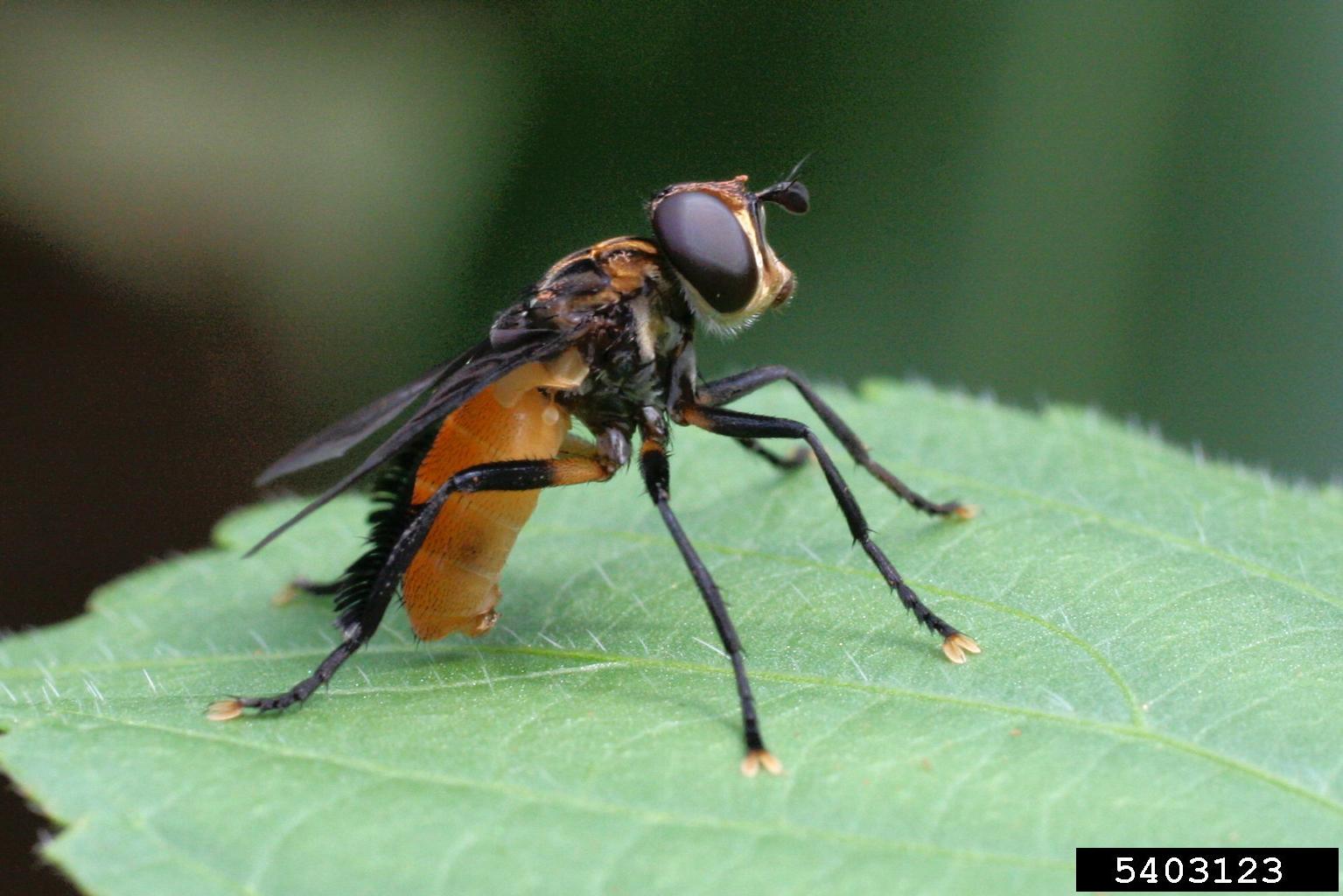
Feather-legged fly (Trichopoda pennipes)
Another important group of parasites is the entomopathogenic (beneficial) nematodes (EPNs). As opposed to the hated plant parasitic nematodes, EPNs cause no harm to plants but instead complete their life cycle inside of insect hosts. EPNs are small, thin, primarily soil-dwelling roundworms that fulfill an ecological role between a parasitoid and an insect pathogen.
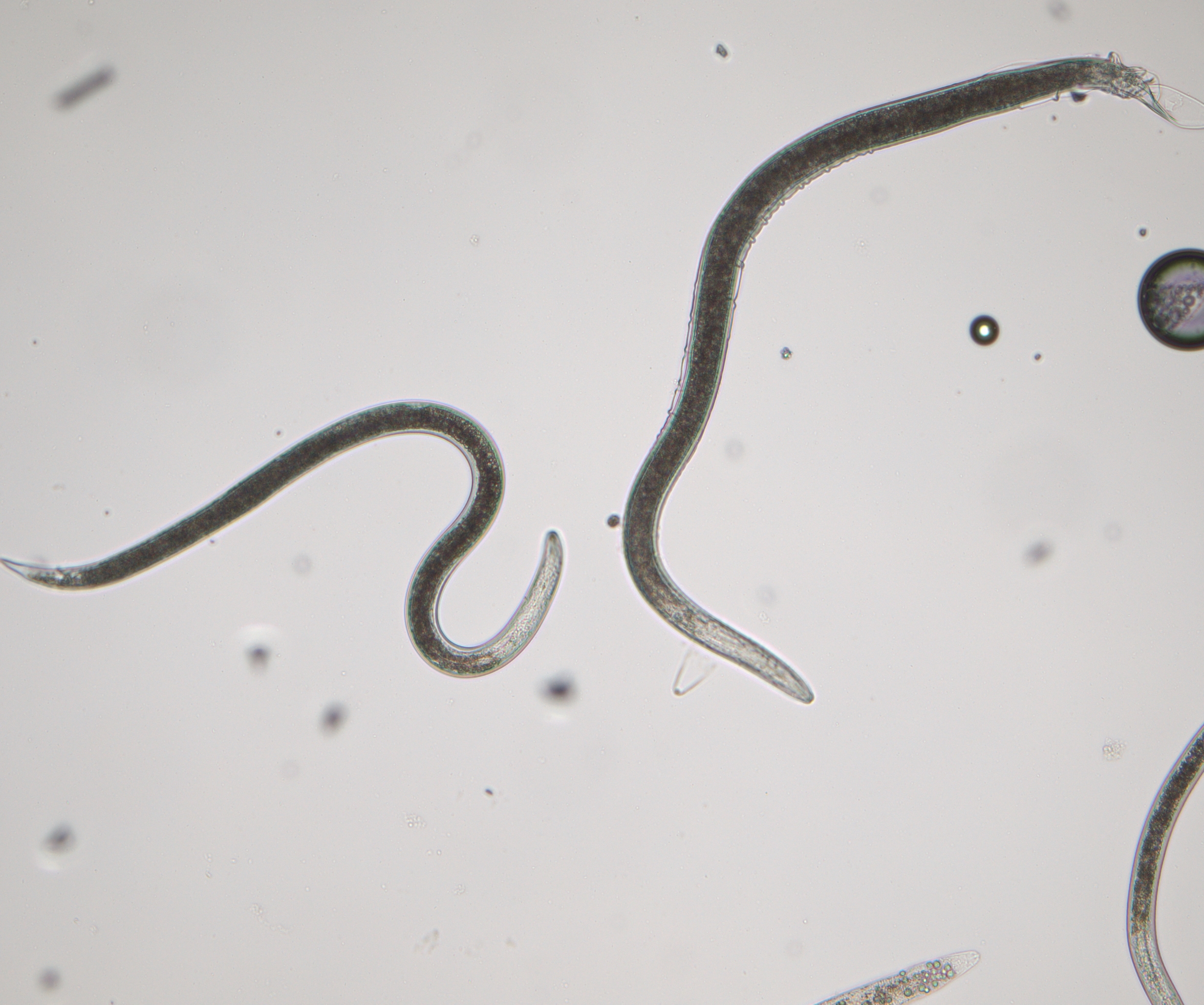
Steinernema glaseri, one of many commercially available EPN species. These small, roundworms can infect tons of insect species, including many important crop pests. Photo Credit: Kate Anderson, USDA-Agricultural Research Service/University of Georgia.
Several groups of nematodes infect insects, including the Merimithidae, Neotylenchidae, Heterorhabditidae, and the Steinernematidae. The Steinernematidae and Heterorhabditidae are especially important to agricultural biological control as they contain two genera, Steinernema and Heterorhabditis, respectively, that are commercially produced as biological pesticides used to control numerous insect pests (Hajek and Eilenberg 2018). The EPN life cycle begins and ends with a stage known as the infective juvenile (IJ), which is also the life stage that is purchased and applied for pest management. This is the only life stage that lives outside the host, and its sole goal is to find a host to infect. IJs often travel in groups as they search for a host, and much work has been done on the group dynamics that are at play as the group searches, finds, and infects a host. Once the IJs have found a host, they will enter the host through any open areas they can exploit. Once inside the host, the IJs excrete bacteria that are symbiotic with the nematode, and it is these bacteria that primarily kill the host. The IJs develop into adults and reproduce, using the bacteria as a food source. Several generations of nematodes may be present in the host, as they will continue to feed and reproduce as long as food and space are available. As these resources dwindle, any IJs present will leave the host and enter the world to find another host to infect (Shapiro-Ilan et al. 2017; Hajek and Eilenberg 2018). EPNs have been used in pecan pest management, where they have been shown to be highly effective against pecan weevil and a good supplement to foliar insecticides, as they can kill the weevil while it is still below ground (Shapiro-Ilan et al. 2017; Slusher et al. 2025). EPNs are useful biological control agents, as they are effective against a wide range of pests and can be easily applied using any type of spray equipment used to apply insecticides.

Common insect natural enemies found in pecan orchards. Photos & credits are listed below each photograph.
Challenges to EPN adoption are the cost of the application and the lack of persistence in some commercial strains.
Predators. In contrast to parasites’ complex host interactions, a predator’s relationship with its prey is simple: kill and eat them. In pecan, important predators include lady beetles, lacewings, syrphid flies, and predatory stink bugs. Predators may vary in their preference for prey species and are often grouped into two main categories: specialists and generalists (Hajek and Eilenberg 2018; Pedigo et al. 2021). Specialists often feed on one or a few prey species; for example, some species of lady beetle only feed on aphids or scales. Generalist predators are less picky in their approach and will often feed on multiple types of prey. Mantids and assassin bugs are good examples of generalist predators as they will attempt to kill and eat anything that they can take down, including other natural enemies. This can be a double-edged sword for pest management because generalist predators can switch prey species when pest populations are low, extending their longevity in the orchard. However, it also means that they may be feeding on non-pest food sources and not be contributing to pest suppression (Pedigo et al. 2021). Predators play a significant role in pecan pest management. Lady beetles are major predators of pecan aphids and mites, with the multicolored Asian lady beetle being an extremely effective pecan aphid predator (Abbas et al. 2013). The multicolored Asian lady beetle is so effective at feeding on pecan aphids, there is an argument that it has significantly reduced the need for aphicide treatments against the blackmargined aphid and yellow pecan aphid wherever it has been introduced. Lacewing larvae are also very effective predators of pecan aphids, earning them the nickname ‘aphid wolves’. Several species of stink bugs have forgone plant feeding in favor of being predators and will feed on just about any insect they can subdue. Assassin bugs, spiders, and mantids will also feed on a broad range of pests and beneficials in pecan orchards as well. Smaller predatory insects, such as minute pirate bugs, predatory mirids, and big-eyed bugs, may also contribute to early season pecan pest management, but their role and impact is largely unexplored in pecans. Birds and bats have also been found to contribute to pecan pest management. Diet studies of several bat species, including the eastern red bat (Lasiurus borealis) and Mexican free-tailed bat (Tadarida brasiliensis), have found DNA from both pecan nut casebearer and hickory shuckworm (Cydia caryana) in bat feces (Brown et al. 2015; Braun de Torrez et al. 2019). In addition, a study in Florida found that the tufted titmouse (Parus bicolor) can feed on roughly 2,100 PNC over a three-week interval (Whitcomb 1971).
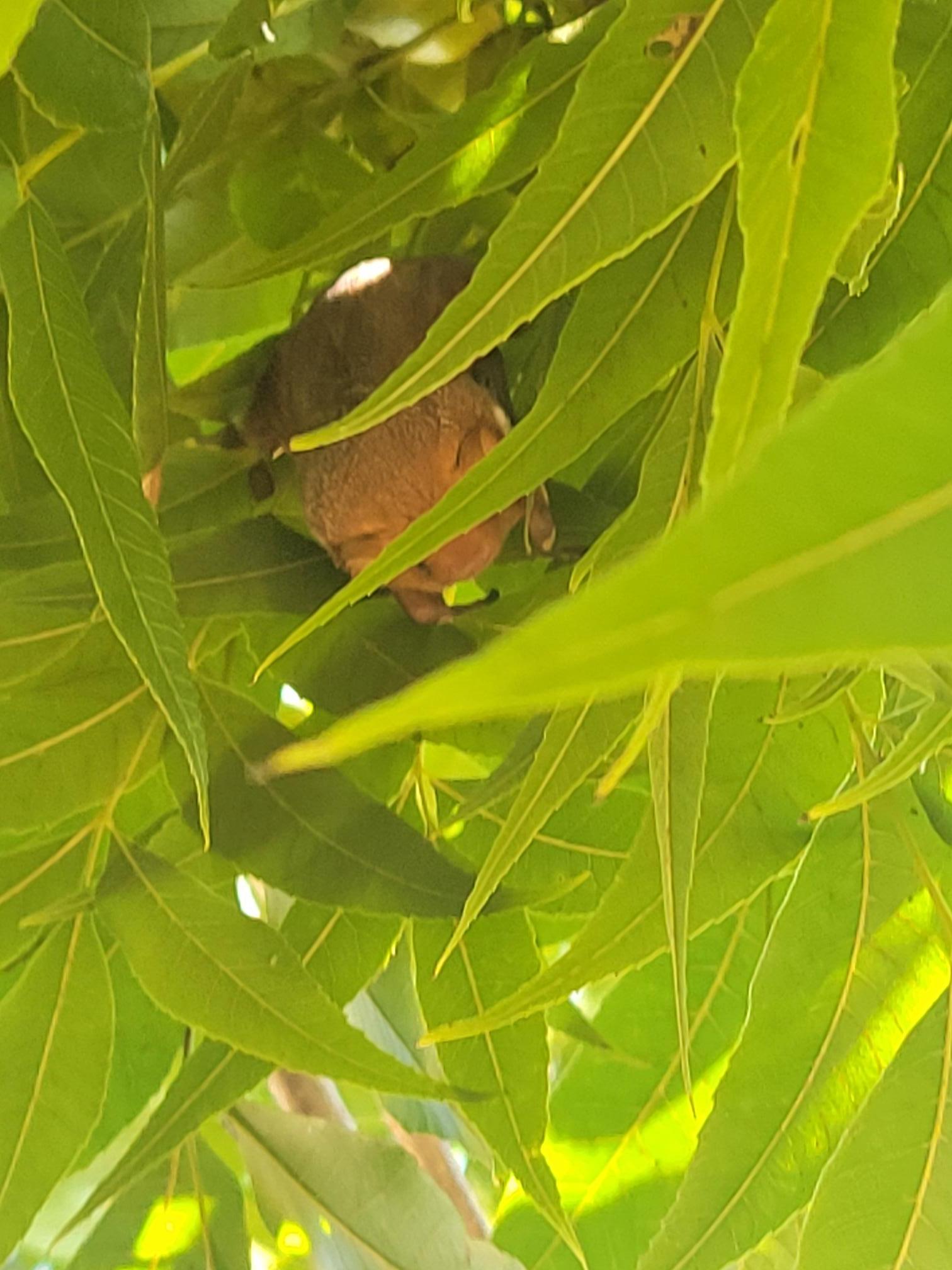
Several bat species, like this eastern red bat, can be found in pecan orchards and may feed on pests such as PNC and hickory shuckworm. Photo Credit: Kyle Slusher, Texas A&M AgriLife Extension Service
Biopesticides and Pathogens. Numerous viruses, bacteria, and fungi can affect insects, causing reproductive issues, decreased growth, and/or death, with several being commercially available. Studies on these organisms go far back in human history, including the discovery of a fungus (Beauveria bassiana) causing white muscadine disease in silkworms (Bombyx mori) (Vega et al. 2009). Most insect pathogens are sold as biopesticides or microbial insecticides and are packaged and labeled much like conventional insecticides. EPNs are also sometimes sold with this labeling (Pedigo et al. 2021).

A pecan weevil infected with white muscadine disease caused by the entomopathogenic fungus Beauveria bassiana. Photo Credit: Louis Tedders, USDA Agricultural Research Service, Bugwood.org (Retired)
Several species of bacteria are used as biopesticides and are among the most widely used biopesticides due to the success of a bacteria known as Bacillus thuringiensis (BT) against moth caterpillar, beetle, and fly pests. Its cousin, Bacillus popilliae, has also been successfully used against Japanese beetles. The spores of BT, upon ingestion, cause gut paralysis and cause sepsis by penetrating the gut (Hajek and Eilenberg 2018; Pedigo et al. 2021). Several BT products are labeled for pecan and have shown decent efficacy against moth pests such as PNC and hickory shuckworm (Knutson and Ree 2019). Another well-known bacteria-based insecticide is Chromobacterium subtsugae, which is sold under the trade name Grandevo®. Grandevo® has been shown to be effective against pecan weevil and achieved levels of control comparable to carbaryl or bifenthrin (Shapiro-Ilan et al. 2017).
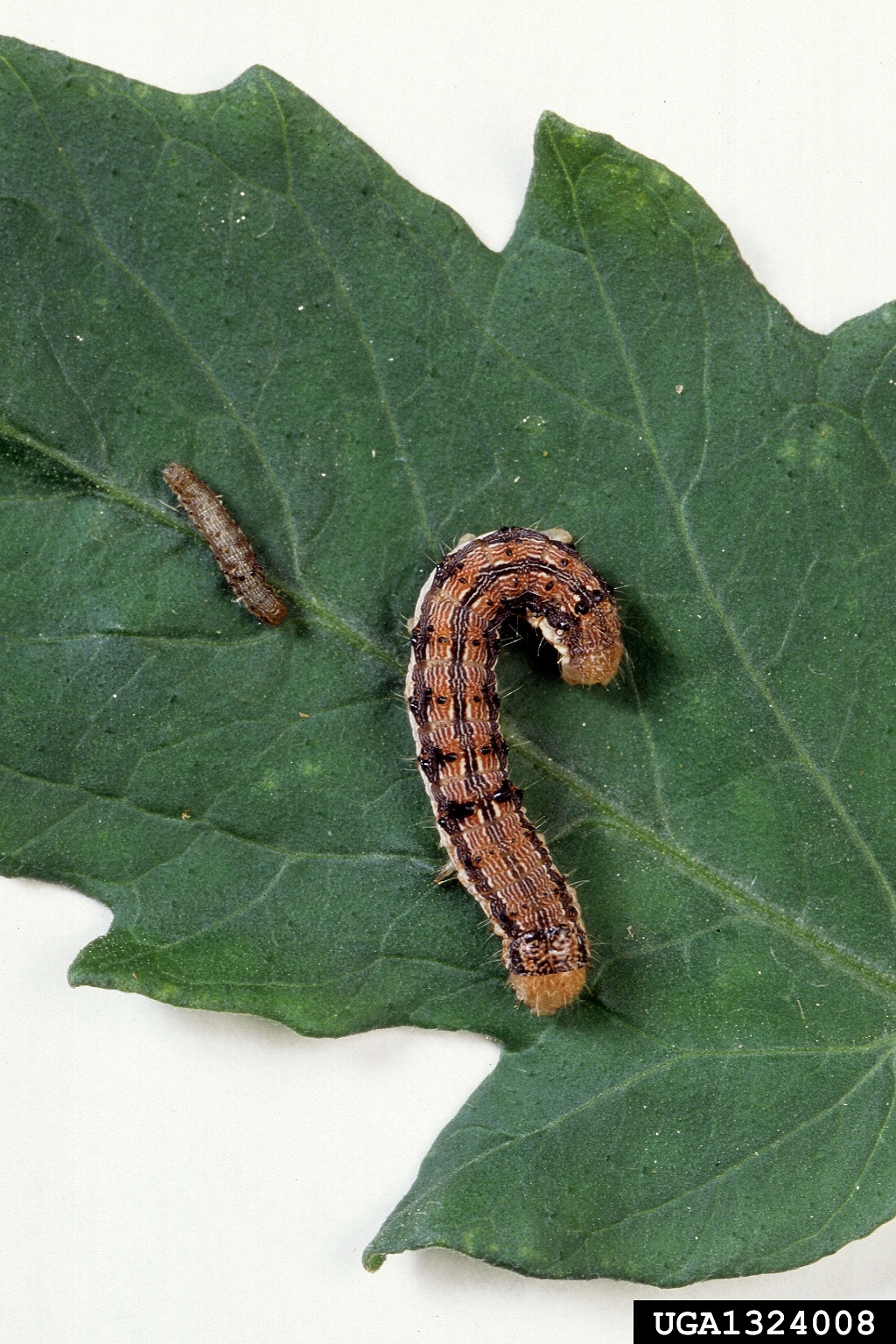
Two 10-day old corn earworm larvae. The one on the left has been fed a baculovirus causing its growth to be stunted. Photo Credit: Scott Bauer, USDA Agricultural Research Service, Bugwood.org
The most used entomopathogenic viruses are the baculoviruses, including nucleopolyhedrovirus (NPV), cytoplasmic polyhedrosis (CPVs), and granulovirus (GV) (Hajek and Eilenberg 2018; Pedigo et al. 2021). NPVs are the most successful of the group and are especially effective against caterpillar pests. Infection with this virus causes the larvae to darken, at which point the larvae crawls to the highest point on the host plant and dies. The husk of the infected insect then ruptures, spewing the new virus into the environment (Pedigo et al. 2021). Currently, there is little published research on the use of EPVs to manage pecan pests.
There are over 750 species of Entomopathogenic Fungi (EPFs) known in the world, with several species sold commercially, including Beauveria bassiana and Metarhizium brunneum (Sharma et al. 2023). EPF spores infect insects by attaching to the insect’s body, germinating, and penetrating the body wall. Once inside the body, the fungus spreads through the insect’s body, producing toxins that quickly kill the insect. The fungus will later erupt from the insect’s body (Hajek and Eilenberg 2018). Beauveria bassiana erupts in a white foam that makes the insect look like a cotton ball, while Metarhizium spp. produces a green color. Both B. bassiana and Metarhizium have been studied for use on pecan pests, with a specific focus on pecan weevil. For example, trunk applications of B. bassiana caused >75% average mortality in studies on pecan weevil adults (Shapiro-Ilan et al., 2008).
In addition to direct applications via spray equipment, research in the lab and greenhouse has also shown that pecan trees inoculated with B. bassiana spores can take the spores up into their tissue, providing them with built-in protection against pecan pests (Ramakuwela et al., 2019). Lab studies showed high mortality in pecan aphids exposed to B. bassiana inoculated leaves. EPFs are a useful and versatile tool against pest insects, however, much work needs to be done to solve challenges related to persistence in the field, as EPFs’ sensitivity to UV and humidity limits their use in the field.
Summary and Conclusions
As described above, there are multiple ways to implement biological control and many different types of biological control agents for growers to consider. Growers should assess their pest issues and overall goals for their operations to determine what type(s) of biological control they would like to implement in their orchard and what types of biological control agents to focus on. Cost, available resources, labor, and space can determine what is possible for growers to consider. Natural enemies can be a valuable supplement to any pesticide spray program and are an invaluable part of any Integrated Pest Management (IPM) program.
