
Why are my nuts (pecans) dropping?
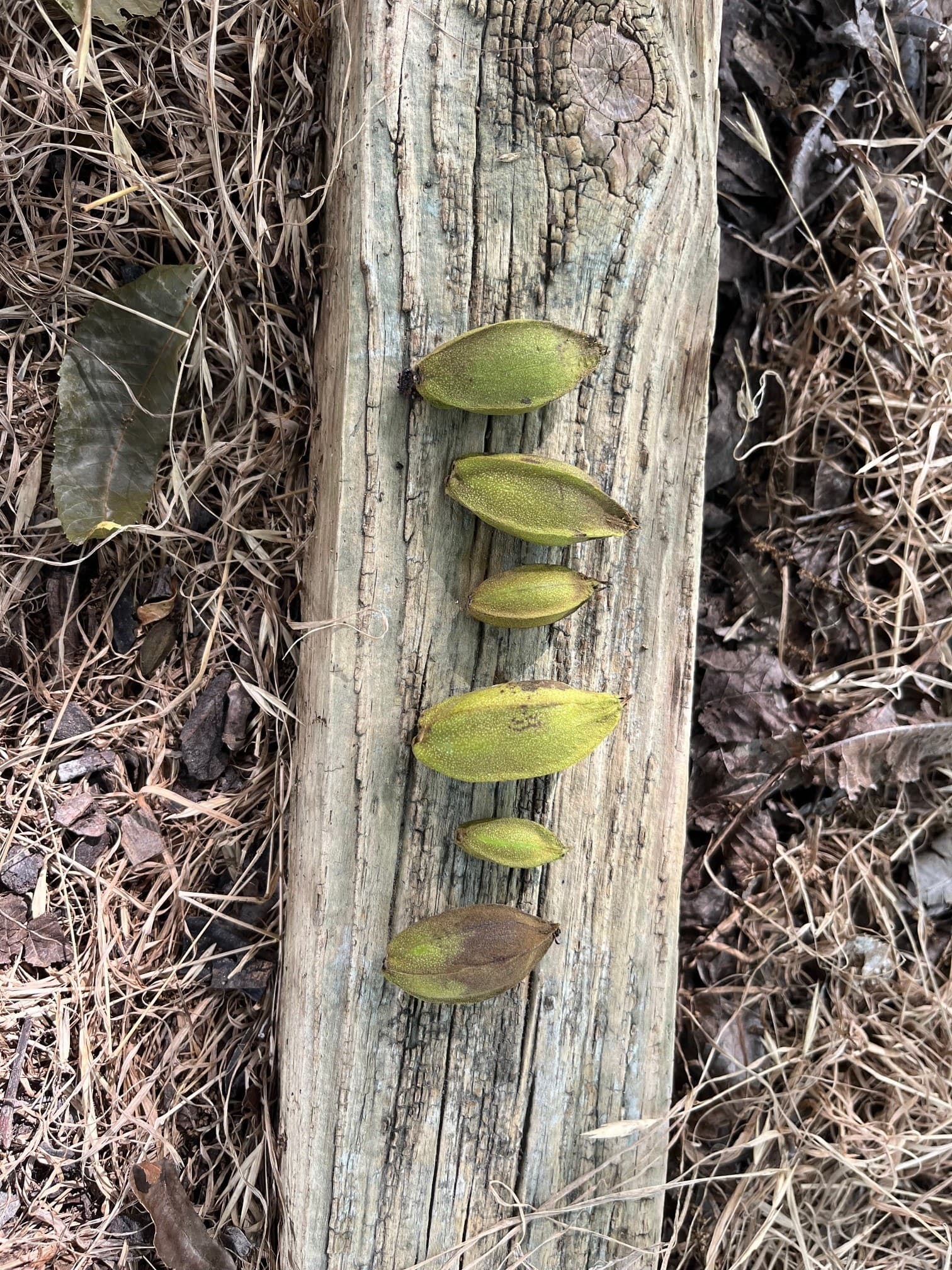
Larger pecans lost during the June drop as the tree adjusts its load. (Image provided by Larry Stein)
just look around at how those drought‑stricken pecan trees have bounced back, along with the healthy ones. The amount of growth in many places has simply been phenomenal, and in my humble opinion, this is simply from the rain. Oftentimes we want to think it is nutrition, perhaps a micronutrient, or something else, but most of the time our issues are simply the lack of water. This lack of water is further exacerbated by the different types of soil in your orchard; some soils are better than others, period! Thus, you will see leaf scorch/drop in different parts of your orchard, even though the majority of the trees are fine. The other kicker in the different tree performance among soils is the pecan tree rootstock. Currently all commercial pecan trees are grown on seedling rootstocks, meaning they are all different. In some cases, the rootstock is simply inferior.
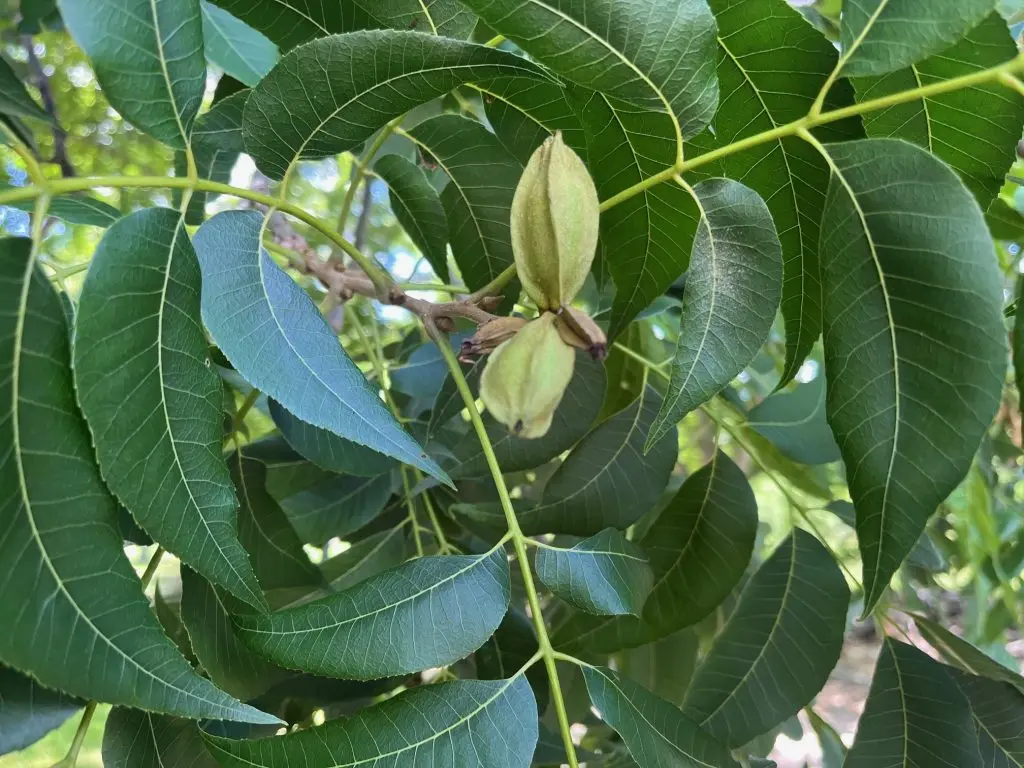
Shriveled pecan nuts still hanging on the tree (Image provided by Larry Stein)
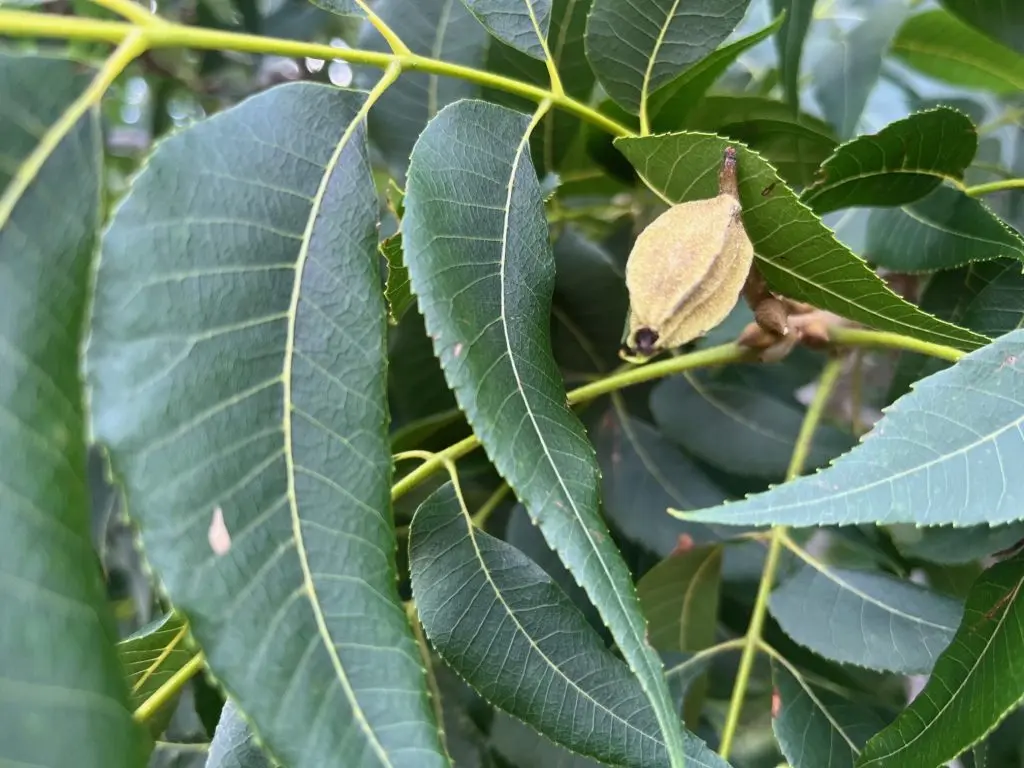
Nut set has been sporadic across the various regions, but most are seeing some pecans on their trees and as the nutlets get larger, growers are able to see a few more nuts. But one thing of note this year seems to be the dropping/shedding of pecans. Most often we see nuts drop from pecan nut casebearer damage, but in that case the frass from the worm is quite evident. Many of you have heard the term physiological; say that to a farmer and you will get a look to travel on! As in their heart they know that you really don’t know and you rattle off a big word to appease them. Years ago, Dr. George Ray McEacher and John Cooper put some hanging nets/baskets in pecan trees to see how many of the nuts that a tree initially puts on make it to maturity. That number, give or take, was about 60 percent. In other words, about 40 percent of the nuts are going to drop regardless of what you do. This is often a good thing as in many years, trees set far more nuts than they can carry to maturity.
The first nut drop you will see is abortion of the nut cluster before it can even be pollinated. In this situation, the tree seemingly has enough food to push a shoot and cluster, but the cluster aborts shortly after that. In this case, we think the tree simply did not have the food reserves to set that cluster. This is typically seen after a big crop the year before and/or stress to the tree prior to the growing season.
The next drop is associated with the lack of pollination of the nutlets on the cluster. This would be nuts that drop shortly after pistil receptivity and pollen shed. Either the pollen was not viable, and germination did not occur, or there was insufficient pollen, or there was some weather event, maybe too much rain, which did not allow the pollen to disperse as it normally would. These nutlets are quite small when they drop.
Then there is “June” drop, the name is associated with time of the year that this drop usually occurs. The nuts are a bit larger when they drop, and this drop is more alarming than others since it seems more noticeable with the larger nuts. These nuts can be heard hitting roofs, etc, if one is outside. We think this drop is associated with a successful pollination event, however, the fertilization event of the sperm cells from the pollen grain and the embryo sac is not. Again, some weather events, and/or tree health probably has something to do with this issue.
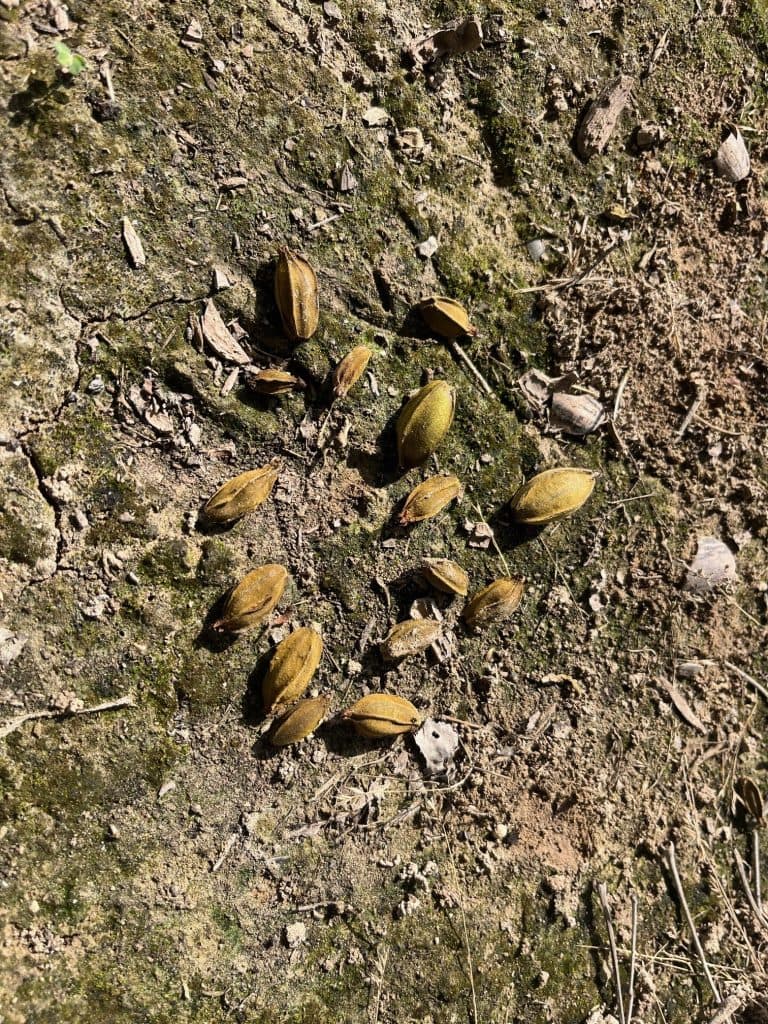
Shriveled pecan nuts dropped as the tree thins its crop. (Image provided by Larry Stein)
Other drops during the year can be associated with insect feeding, pecan nut casebearer; the first two generations can cause significant drop. Usually, we are not too concerned about the second generation, but in a low crop year it could be significant. Then the feeding of insects like stink/leaf footed bugs can cause nut drop prior to shell hardening. Feeding after the shell gets hard does not result in nut drop.
So, as you should ascertain, there are multiple reasons for the shedding of pecans during the growing season. In addition, such drop is associated with specific varieties, namely Desirable. Desirable has been known to shed 40 to 60 percent of the nut clusters for whatever reason. Clusters of 3 and 4, often shed to one nut per cluster. Studies were conducted to pinpoint the cause, but there was no real remedy. It is just one of those things that occurs. Interestingly enough, the Desirable drop the last few years has not been great and we have actually observed overloaded Desirable trees, which does not happen often. Unfortunately, this year Desirable seems like it is back to normal with an above average drop.
As you continue through this growing season, make it a point to observe what kind of crop you have in the trees and manage it as such. Do not be alarmed if some nuts hit the ground, remember that 40 percent number that will occur regardless of what you do. And perhaps, your orchard has too many pecans and part of the crop needs to come off. Now is prime time to make that determination! The key is to react and practice “fruit thinning” if needed before the trees shut down. Good luck on making the proper decision.
