
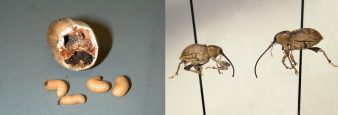
Pecan Weevil Mitigation and Eradication
The pecan weevil is a native species that feeds on trees in the Carya genus, including pecan, hickory, and walnut in the genus Juglans. Adult pecan weevils typically emerge from the soil between August and November, with peak populations observed between August and September. This emergence is usually timed with the initiation of kernel development....
Read more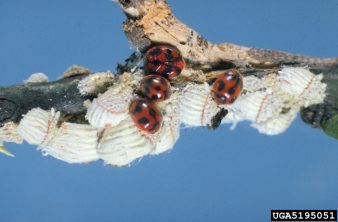
The Good Guys: Natural Enemies 101
History and Types of Biological Control Biological control is defined as the use of living organisms to suppress the population of a specific pest organism, making it less abundant or less damaging than it would otherwise be (Eilenberg et al. 2001). The practice of biological control has ancient roots. For example, as early as 324...
Read more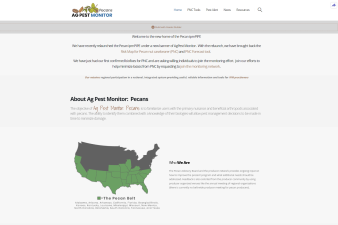
Updates on the Texas Statewide Pecan Nut Casebearer Monitoring Program
History of Texas Pecan Nut Casebearer (PNC) Monitoring Program Sharing information to predict when to manage PNC is not a new concept. Growers have often used word of mouth to determine when they can expect to see flights in their area. The emergence of PNC in Texas often follows a South to North emergence pattern,...
Read more
IRAC and Insecticide Resistance Management
Insecticide resistance presents a global threat to food security and is estimated to cost the United States over $1 billion dollars annually. The first major recorded observation of insecticide resistance was lime-sulfur spray resistance in San Jose scale in 1908. In 1946, house flies in Sweden were found to be resistant to the widely used...
Read more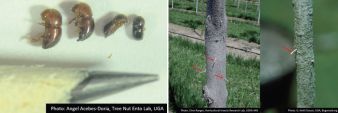
Early Season Pecan Pest Management
We are quickly approaching pecan season here in Texas, as warmer temperatures will lead to the breaking of buds and the production of new leaves and nuts. However, warmer temperatures will also encourage hungry pecan insects to emerge from their hiding spots looking for food. In this article, we will discuss some of the pests...
Read more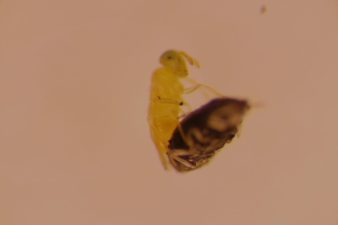
Beneficial Insect Series Spotlight: The Pecan Aphid Parasitoid (Aphelinus perpallidus)
For this month’s edition of the Beneficial Insect Series Spotlight, we will cover another overlooked but important beneficial insect: the pecan aphid parasitoid, Aphelinus perpallidus. This tiny wasp was the key subject in my PhD dissertation as I uncovered some of the ecological interactions between it and the pecan aphids that it is a parasite...
Read more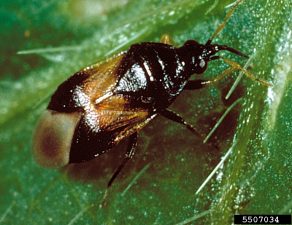
Beneficial Insect Series Spotlight: Minute Pirate Bugs, Plant Bugs, and Big-Eyed Bugs
Most people who have walked through a pecan orchard often notice the larger and more colorful beneficial insects such as lady beetles and lacewings. However, there are some smaller, less noticeable beneficials that are no less important than their more charismatic cohorts. In this second edition of the beneficial insect spotlight, we will look at...
Read more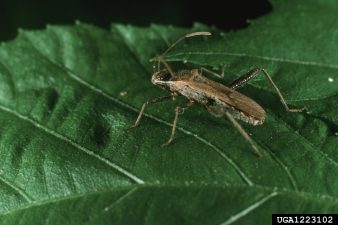
Beneficial Insect Series Spotlight: Assassin Bugs
With the 2024 pecan season slowly reaching its end and the weather beginning to turn cool, we will see a reduction in pecan pest issues. Considering this development, I will be spending the next few months doing what I like to call the “Beneficial Insect Series Spotlight.” For the next few months, I will devote...
Read more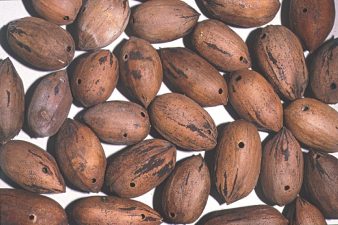
Post-Harvest Pecan Pest Management
As we near the end of the 2024 pecan season, it is important to remember that the decisions we make heading toward the end of the year can potentially affect next year’s crop. While several key pests may be starting to disappear and spraying may be reduced to make time for harvest, there are still...
Read more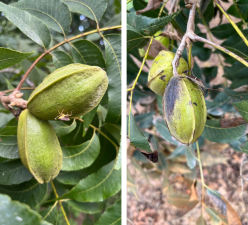
Diversity and Management of Stink Bugs and Leaffooted Bugs in Pecan Orchards
Biology and Damage Several species of stink bugs and leaffooted bugs can be found in pecan orchards. Among these, some can be severe pests that have the potential to damage yield, while others are less damaging. Stink bugs and leaffooted bugs can be present in pecan orchards all season. Because they feed on many host...
Read more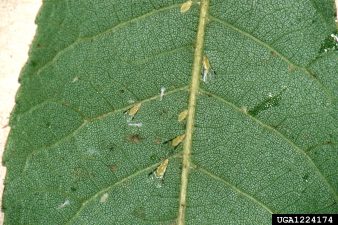
Managing Pecan-feeding Aphids and Their Natural Enemies in Pecan Orchards
While present in orchards throughout the year, late summer and early fall can be a critical time to monitor pecan aphid populations. Yellow pecan aphid and blackmargined aphid can often experience a population boom (especially when there is a lack of rainfall), while black pecan aphid experiences its highest seasonal populations around this time. These...
Read more
American Snout Butterflies in Texas Pecan Orchards
Pecan growers in parts of Texas may have noticed the sudden presence of a swarm of strange looking butterflies in their orchards this summer. This butterfly, while dull in color, stands out because its labial palpi are elongated to form what looks like a large ‘snout.’ This is the American snout butterfly. The American snout...
Read more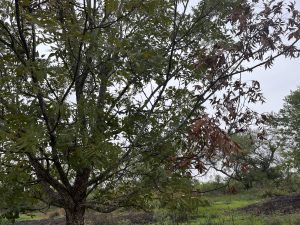
Flatheaded Borer in Pecan Trees
Environmental stress, such as a prolonged drought or a hard freeze, is a major issue for pecan production in Texas. Not only does stress affect tree growth and production, but it can also make the trees more susceptible to attacks from insects such as flatheaded borers. Flatheaded borers, also called metallic woodboring beetles and “jewel...
Read more