
Mating Disruption:
An Approach to Pest Management
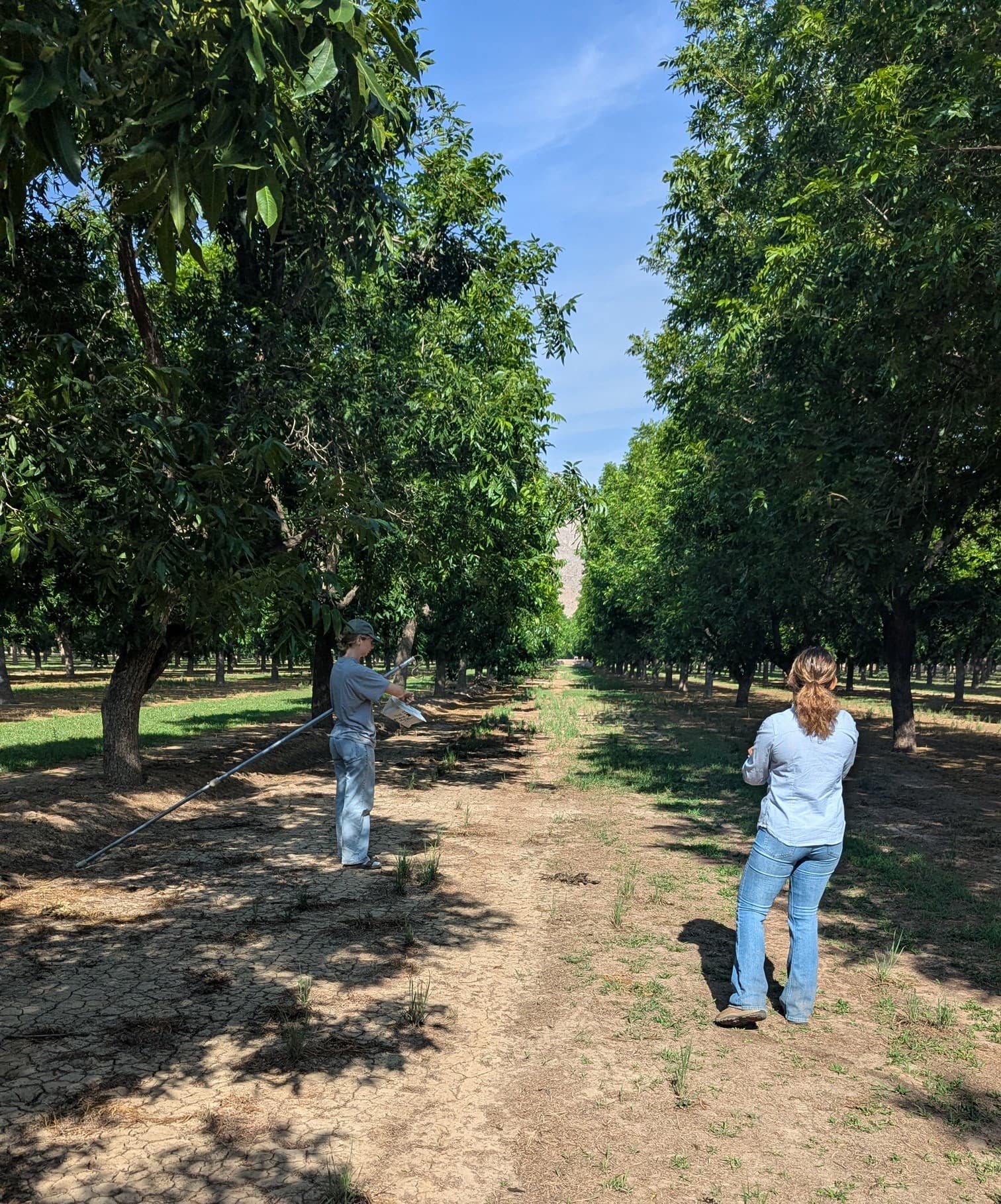
Figure 1. Checking pheromone baited traps regularly will establish when pecan nut casebearer flights begin in an orchard. (Photo by Kristen Bowers)
If the moths successfully mate, the female will lay 100 or more eggs on developing pecan nutlets within the next week. The larvae will begin feeding on nutlets as soon as they emerge from these eggs, and within three days will burrow into the nutlet. The first generation larvae can destroy more than one nutlet during the course of their feeding, making it the most economically damaging generation of this pest. The success of any treatment for pecan nut casebearer depends on understanding the mating and egg-laying cycle. The most effective treatments target the most vulnerable life stage of PNC, which is the small larvae before they enter the nutlet.
What if the male moths couldn’t find female moths because a whole orchard smelled like female moths? Using insect sex pheromones to disrupt their lifecycle by preventing males and females from finding one another is known as mating disruption. The first commercial product for mating disruption was registered in 1978 for pink bollworm. Currently, over 100 different mating disruption products are registered for 18 different species of insect, most of which are moths.
The PNC female-produced sex pheromone was first identified and synthesized in 1996. A subsequent “pheromone race” of PNC was identified in Mexico in 2008, and the pheromone itself was identified in 2012. Since then, a combination of using these pheromones and sticky traps as a lure has been commonly used to pinpoint the date of moth flight and subsequent oviposition, or egg laying. The lure attracts the male moth, just as a female would, and the male moths become stuck in the trap. The first two consecutive nights of moth flight mark the “biofix”, or the date from which to count ahead to scout for eggs and plan to treat PNC.

Figure 2. Pheromone traps are an essential part of PNC monitoring but must be interpreted carefully. Traps are only attractive to male moths and are not an accurate indication of egg laying by female moths. Non- target moths, like mesquite bean roller, are also sometimes caught in these traps, which can be misleading. (Photo by Kristen Bowers)
The current approach to modeling PNC flight, based on degree-day models combined with trap captures of male moths, improves the effectiveness of PNC treatments; however, it has some drawbacks. While the traps do tell us when the moths are flying, they are not predictive of egg laying, especially because there are initially more male moths than female moths flying in an orchard. As a result, capturing male moths doesn’t necessarily mean that there will be enough eggs or larvae to justify a treatment. Assuming that capturing male moths means a treatment is required can lead to treating when larvae are below a treatment threshold. In years when treatment is justified, the only effective treatments for PNC are insecticides. Broad-spectrum products, including carbamates, organophosphates, and pyrethroids, can kill natural enemies and can flare secondary pest outbreaks. Reliance on one mode of action all season will eventually cause resistance to that class of products.
Another disadvantage of degree-day modeling plus insecticide treatment is the difficulty of timing treatment. For areas that rely on flood irrigation, the delivery of water can coincide with the optimal timing of a PNC treatment. The result is that the treatment will be too early or too late, leaving enough larvae alive to cause an economic injury. A second timing issue could be that it is impossible to treat an entire orchard at the optimal time, so that some orchard blocks will be treated too early or too late.
Mating disruption of PNC, either as a stand-alone strategy or in combination with the current degree-day modeling, has the potential to reduce damage to nuts, reduce insecticide treatments of PNC, and ultimately reduce PNC populations in pecan growing regions. The pecan nut casebearer is a good target for a mating disruption strategy for several reasons. Female moths produce tiny amounts of sex pheromone, even by moth standards, and the males are extraordinarily sensitive to the pheromone in low amounts. This means that it does not require a large amount of pheromone in an orchard to disrupt mating, which lowers the cost of producing a mating disruption product. Secondly, since PNC is host-specific, the only source of PNC is other pecan trees. This differs from moths like the coddling moth that attacks both apples and pears, or the oriental fruit moths that attack peaches and apples. Finally, since the pheromones have already been identified and we know they work in traps, the pipeline to a commercial product is much shorter. Other advantages of mating disruption generally are season long control and potential compatibility with organic or other certification programs. Pheromone devices can be placed out in the field in April and collected once the threat of PNC passes in the late summer.
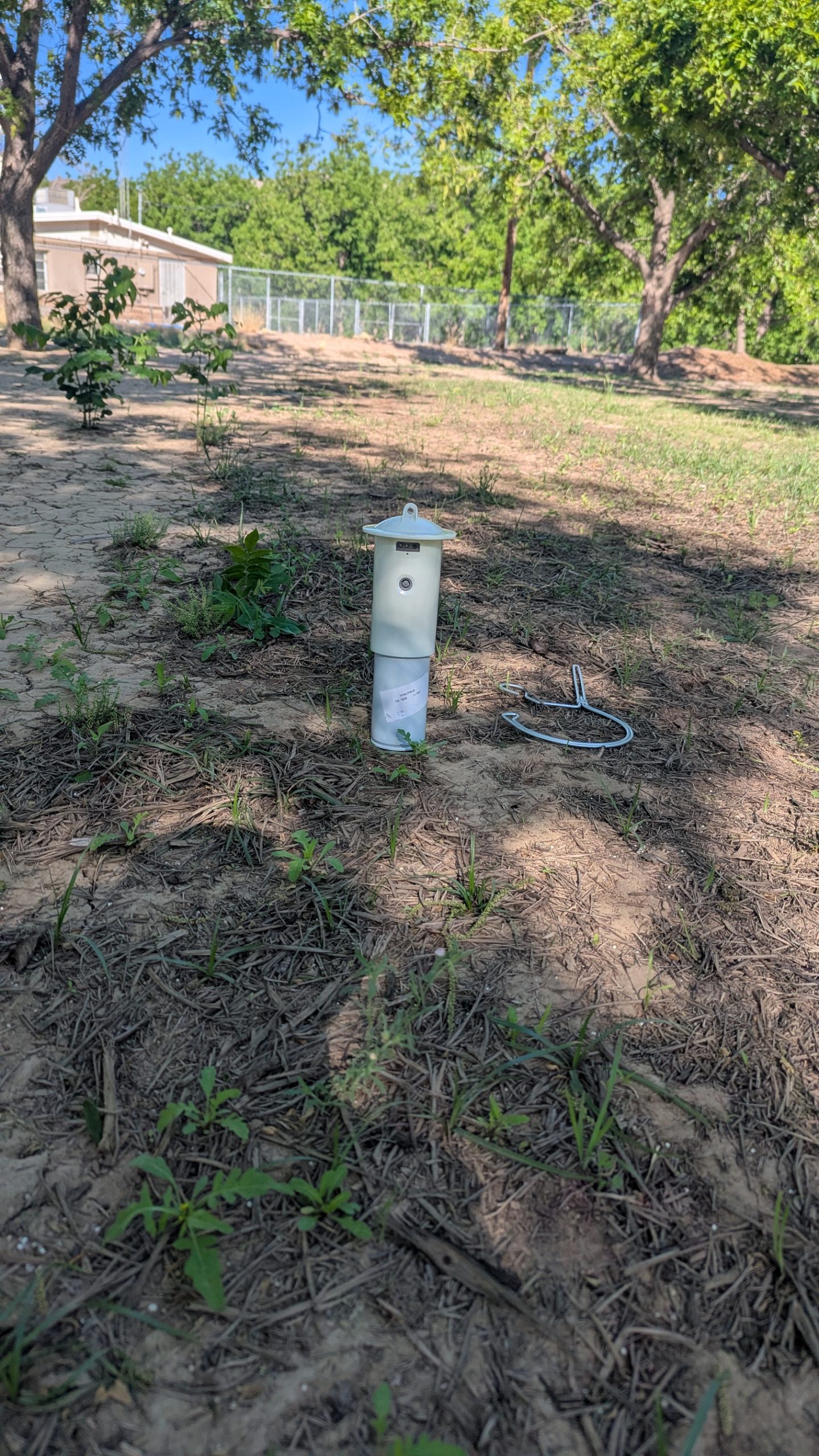
Figure 3. Aerosol emitters placed toward the upwind edge of an orchard can be programmed to dispense appropriate pheromones at regular intervals throughout the season. (Photo by Kristen Bowers)
Mating disruption can work in several different ways. Male moths exposed to synthetic pheromone can become confused and follow the synthetic trail instead of a calling female, or they can become exhausted from searching without finding a mate. Male moths can also become habituated to a scent, much in the way that you may notice a smell when you first walk into a room, but become accustomed to it after a few minutes. The synthetic pheromone may also camouflage the female call. Different types of pheromone delivery systems exist, depending on the pest pressure and the specific response of the males to the sex pheromone, as well as the structure of the crop. Pheromones can take the form of hand applied reservoirs, sprayable microencapsulated products, and aerosol emitters. Understanding which type of response male PNC have to the pheromone is important for the design of a mating disruption strategy in pecan.
How do we know if the mating disruption is working? Mating disruption can be evaluated by trap shutdown, egg lay, nut damage, and ultimately yield. Trap shut down means that the male moths are unable to find a pheromone-baited trap, so there should be no moths in the trap even though moths are flying. If the males cannot find the trap, they also presumably cannot locate female moths. Suppose there is trap shut down in an orchard treated with pheromone, which is a preliminary sign that the mating disruption is working. However, trap shutdown alone is not sufficient to protect an orchard. Especially in regions with wild pecan or large amounts of untreated orchards, already mated females may fly in from a nearby orchard to a pheromone-treated orchard to lay eggs.
Research in North and West Texas (Pecos and Reeves Counties) tested the effect of PNC pheromone (not the blend of both US and Mexican strains) applied as microbead or paintballs on trap shutdown, number of eggs, and nut damage. The blocks with pheromone had very few moths caught in their pheromone traps, but only one out of four blocks had fewer eggs or less nut damage. The authors suggest that putting the pheromone out earlier, before male moths start flying, and using a blend of pheromones may provide more effective mating disruption.
Even when executed perfectly, mating disruption can have its limitations. For areas that have large numbers of wild pecan trees, it is not possible to prevent already mated females from laying eggs in treated orchards. In these cases, treating perimeter trees closest to the suspected source of mated females may be effective. For the same reason, in small orchards, dispensing pheromone over a limited area without coordination from neighboring orchards is unlikely to be effective.
Currently, trials are underway in New Mexico to determine if newer aerosol emitter technology using the blended pheromone can provide adequate protection for PNC. Future trials will be needed to determine an optimal size and placement of emitters, which will determine the final cost of the product. While mating disruption alone may not be a viable strategy for every grower, it’s potentially another option for PNC control.
